Create a winning pitch deck with tips and design examples. Showcase your startup's unique value proposition and potential for success with a concise and engaging pitch deck.
A winning pitch deck is a crucial component of any startup's fundraising efforts. It is a well-designed and persuasive presentation that has a clear and compelling story, a clever structure, and the ability to showcase your startup's potential to investors. A pitch deck is essentially a visual representation of your business plan, highlighting key aspects of your startup such as your target market, competition, and financial projections.
When crafting your pitch deck, it's important to remember that investors are often inundated with pitches from other startups, so it's crucial to make a strong first impression. This means that your deck should be visually appealing and easy to navigate, with a clear and concise message that grabs the investor's attention from the get-go.
In order to achieve this, you'll need to carefully consider the components of your pitch deck and the order in which they appear. A solid pitch deck outline typically includes slides that cover your company's problem statement, solution, market size, competition, revenue model, team, and financials. However, the exact content and structure of your pitch deck will depend on your specific startup and the audience you're presenting to. It is important to follow the Pitch Deck Structure as well as create a Pitch Deck Outline to guide you in creating a winning pitch deck that will help you secure funding for your startup.
So, whether you're a seasoned entrepreneur or a first-time founder, this lesson will guide you through the process of creating a winning pitch deck that will leave investors excited about your startup's potential. If you don’t want to do all the work yourself, but you’re unsure if you can afford a professional helping you out, take a look at How Much Does A Pitch Deck Cost?
Introduction Slide: Make the Start of your Pitch Deck Structure
Definition
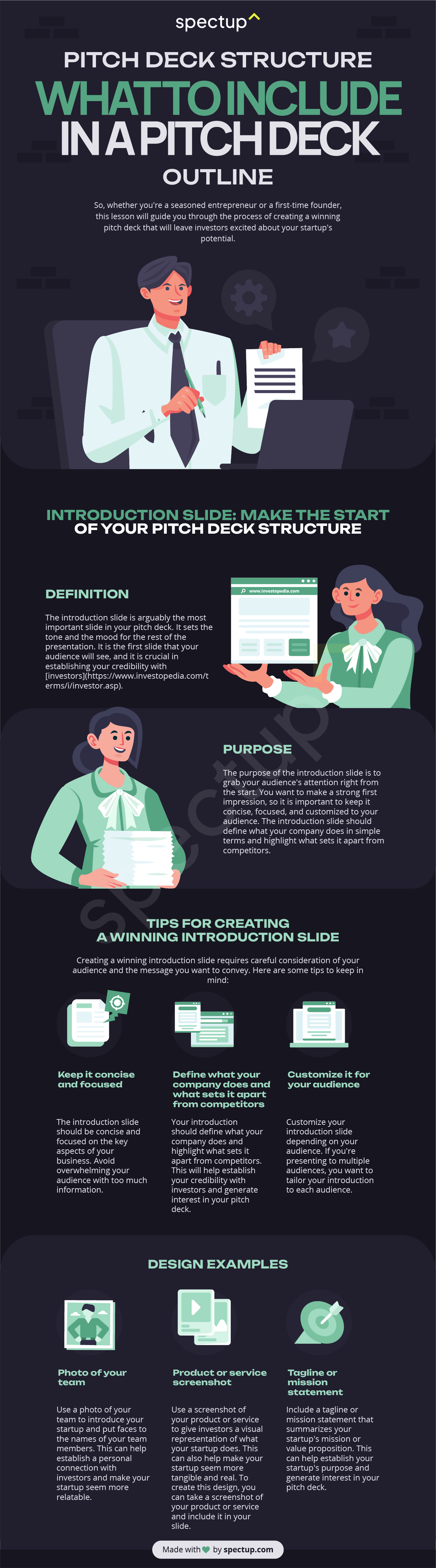
The introduction slide is arguably the most important slide in your pitch deck. It sets the tone and the mood for the rest of the presentation. It is the first slide that your audience will see, and it is crucial in establishing your credibility with investors.
The introduction slide provides an overview of your business and its opportunity, and is often the first impression investors will have of your startup. It includes a brief background on the founders, any founding partners, CEO or senior managers, as well as any other key executives who may be involved in making decisions related to the business's success. It can be helpful to have a fundraising consultant review your introduction slide to ensure it is tailored to your target audience and effectively conveys your startup's potential.
Purpose
The purpose of the introduction slide is to grab your audience's attention right from the start. You want to make a strong first impression, so it is important to keep it concise, focused, and customized to your audience. The introduction slide should define what your company does in simple terms and highlight what sets it apart from competitors.
A well-designed introduction slide can establish your credibility with investors and generate interest in your pitch deck. It is an opportunity to showcase your startup's potential and persuade investors to take a closer look at your business.
Tips for Creating a Winning Introduction Slide
Creating a winning introduction slide requires careful consideration of your audience and the message you want to convey. Here are some tips to keep in mind:
Keep it concise and focused: The introduction slide should be concise and focused on the key aspects of your business. Avoid overwhelming your audience with too much information.
Define what your company does and what sets it apart from competitors: Your introduction should define what your company does and highlight what sets it apart from competitors. This will help establish your credibility with investors and generate interest in your pitch deck.
Customize it for your audience: Customize your introduction slide depending on your audience. If you're presenting to multiple audiences, you want to tailor your introduction to each audience.
Design Examples
Photo of your team: Use a photo of your team to introduce your startup and put faces to the names of your team members. This can help establish a personal connection with investors and make your startup seem more relatable.
Product or service screenshot: Use a screenshot of your product or service to give investors a visual representation of what your startup does. This can also help make your startup seem more tangible and real. To create this design, you can take a screenshot of your product or service and include it in your slide.
Tagline or mission statement: Include a tagline or mission statement that summarizes your startup's mission or value proposition. This can help establish your startup's purpose and generate interest in your pitch deck.
Read Here More About Pitch Deck Structuring Tips: Building Blocks & Key Outlines